

Dental Implants in Plano can replace a missing tooth with a fixed restoration designed to look and function much like a natural tooth, but treatment is planned in stages and is not right for everyone. Whether an implant is appropriate depends on your gums, jawbone, health history, bite, and goals; an in-person exam and imaging are needed to assess those factors. If you are comparing options around Plano, TX, this guide explains how implants work, what evaluation and healing involve, how costs and insurance are considered, and what to ask before you decide. Shifa Dental welcomes patients from Plano and nearby Allen, Frisco, McKinney, and Richardson, with a separate practice location in Garland, TX.
What Should You Know About Dental Implants in Plano?
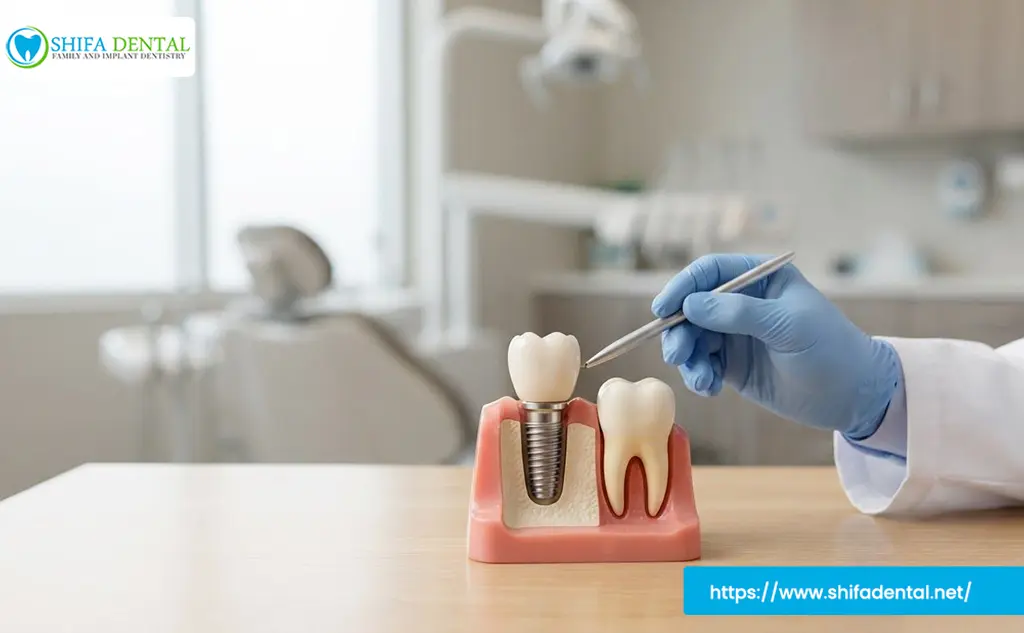
A dental implant is a small post placed in the jawbone to support a replacement tooth. The post acts as an artificial root. Once it has integrated with the surrounding bone, a connector called an abutment attaches the visible restoration. That restoration may be a single crown, a bridge replacing several teeth, or a denture designed to connect to implants.
Unlike a conventional tooth-supported bridge, an implant does not rely on reshaping neighboring teeth for support. It also does not mean that the replacement tooth is maintenance-free: the crown itself cannot decay, but gum inflammation and bone loss can affect the tissues around an implant. Careful planning matters both before placement and long after the new tooth is in use.
People consider implants after losing a tooth to decay, fracture, advanced gum disease, or injury. Some want to replace one tooth; others are exploring a solution for several missing teeth or an unstable denture. Your dentist can explain whether an implant, a bridge, a removable partial, or another approach makes sense for your mouth and priorities.
How Does the Implant Process Work?
What happens during the evaluation?
The evaluation begins with your concerns and medical and dental history. Your dentist examines the teeth, gums, bite, and the space where a tooth is missing. Dental imaging helps assess bone volume, nearby anatomy, and the position that would support a functional restoration. The team may also review medications, tobacco use, diabetes control, past gum disease, and other factors relevant to healing. This is not a pass-or-fail checklist; it helps the clinician identify risks, alternatives, or preparatory care.
Some patients need treatment for active gum disease or decay before implant planning moves forward. If the jawbone is too thin or low in the proposed site, a bone graft may be discussed. Grafting uses bone or a bone-substitute material to build support, but whether it is needed—and how it changes the sequence—can only be established after assessment.
How is an implant restored?
When the site is ready, the implant is placed in the jawbone under local anesthesia, with sedation options discussed when appropriate. After placement, the bone gradually bonds to the implant surface, a process called osseointegration. The healing interval is not identical for everyone. The clinician considers the implant’s stability, bone condition, the location in the mouth, and whether a graft was performed before deciding when it is ready to support the final tooth.
After integration, the abutment and custom restoration are fitted and checked for comfort, appearance, and bite. In selected cases, a temporary tooth may be possible during healing, but an immediate temporary is not suitable in every situation. Ask which parts of the treatment are planned, what will be temporary, and how you will manage eating and appearance between visits.
Current planning may use digital imaging and guided techniques to help the dental team assess anatomy and position. Technology supports clinical judgment; it does not replace a careful exam or eliminate the possibility of complications. The right plan should explain the purpose of each step in plain language.
Which Tooth-Replacement Option Fits Your Situation?
Dental Implants in Plano are one route, not the only route. Comparing the trade-offs helps you make a decision based on comfort, maintenance, neighboring teeth, and your clinical findings—not just on how a replacement looks in a photograph.
| Option | How it is supported | Points to discuss |
|---|---|---|
| Dental implant with crown | A post in the jaw supports an abutment and an individual crown. | Requires surgery and healing; bone and gum conditions must be evaluated; the crown and surrounding tissues need regular care. |
| Tooth-supported bridge | A replacement tooth is joined to crowns on neighboring teeth. | May avoid implant surgery, but adjacent teeth are involved in supporting the bridge and need ongoing attention. |
| Removable partial denture | Can be taken out for cleaning; fit and comfort may need adjustment, and it may feel different from a fixed tooth. |
The table is a general comparison, not a personal recommendation. The condition of nearby teeth, the location of the gap, your bite, the amount of available bone, and your preferences can change which options are reasonable. A consultation should leave you with an understandable comparison, including the advantages and limitations of each option.
What Can Affect Dental Implant Costs in Plano?
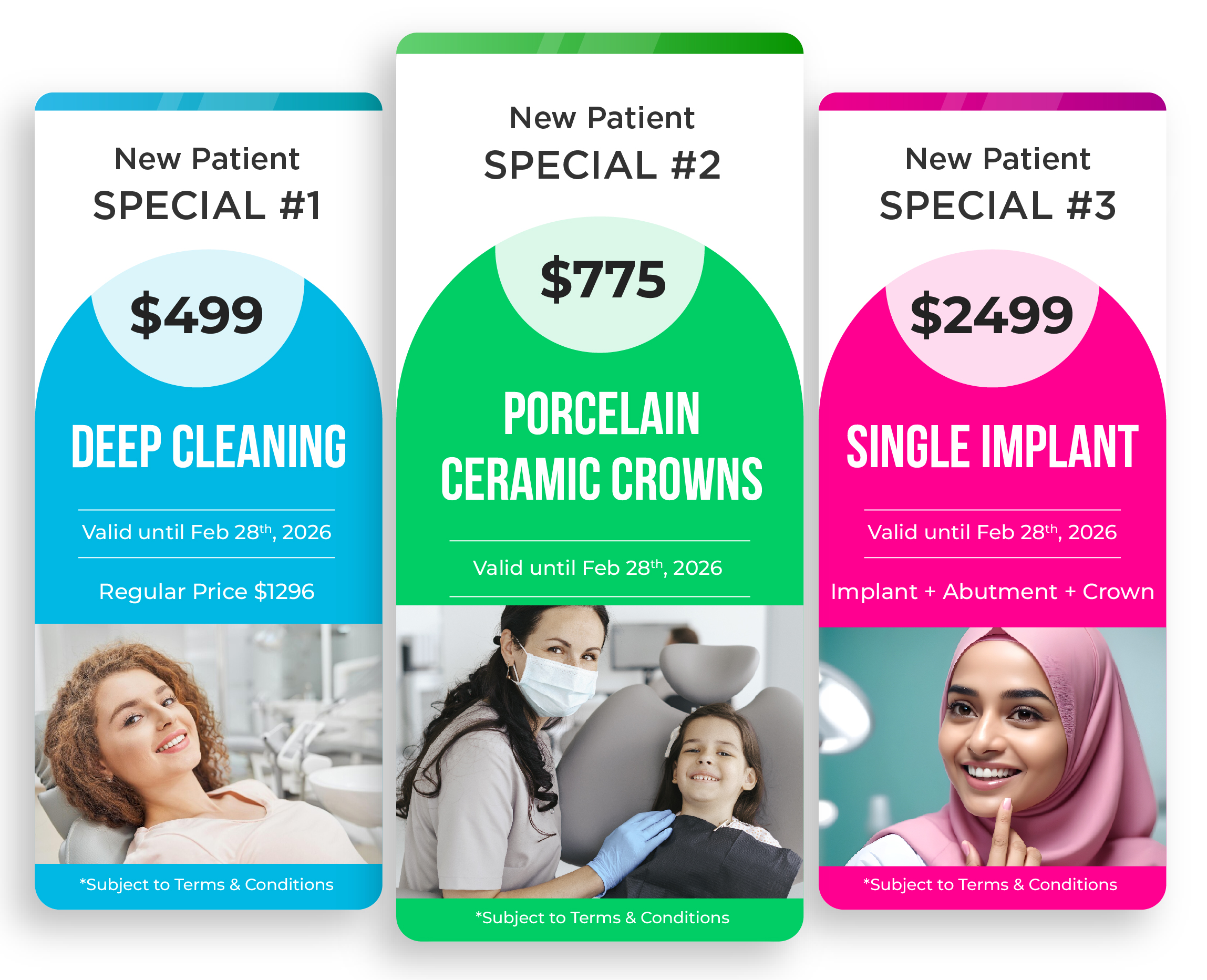
The cost of Dental Implants in Plano is individualized, so a generic online price is not a reliable quote for your case. The total can depend on whether you need a single tooth or a larger restoration, the materials and design selected, imaging and planning, extraction or grafting, the complexity of placement, and the restoration itself. A thorough estimate should distinguish the implant from related services instead of presenting a low headline figure without explaining what it includes.
Dental insurance may contribute toward some parts of treatment, but benefits and exclusions vary. A plan may treat the implant post, crown, extraction, or bone graft differently, and annual limits or waiting periods may apply. Ask the office to verify your benefits, explain what remains your responsibility, and provide a written estimate before you commit. Verification is helpful, but the insurer makes the final coverage determination.
At Shifa Dental, patients receive costs before treatment rather than encountering hidden fees mid-plan. The team can review available payment arrangements, including 0% interest financing options, CareCredit, and the Shifa Dental Saving Plan for uninsured patients. Ask which services each option covers and what eligibility terms apply. If you have received a recommendation elsewhere, Shifa Dental offers a free second-opinion consultation for implants and other major procedures.
Who May Be a Candidate, and What Risks Should You Understand?
Many adults can be evaluated for implants, but age alone does not determine suitability. A healthy foundation of gum tissue and adequate bone support are important. Certain medical conditions do not automatically rule out treatment, yet they may affect healing or require coordination with your physician. Tell your dental team about your complete health history and all medicines or supplements you take; do not stop or change prescribed treatment on your own.
The U.S. Food and Drug Administration notes that tobacco use can interfere with healing and affect implant outcomes. The American Academy of Implant Dentistry also emphasizes general health, oral health, realistic expectations, and a commitment to home care when considering candidacy. These are reasons for an individualized conversation, not reasons to self-diagnose as eligible or ineligible.
As with any procedure, possible complications can include infection, discomfort, delayed healing, injury to nearby structures, or an implant that does not integrate as intended. Later problems may involve inflammation of the tissues around an implant, sometimes called peri-implant disease. Contact a dental professional if you notice persistent or worsening pain, swelling, bleeding, looseness, or a change in how the restoration fits. An exam is needed to determine the cause.
How Can You Prepare and Care for an Implant?
Before treatment, bring your medication list, insurance details, and questions about comfort, scheduling, temporary teeth, and payment. If you use tobacco or have a health condition that affects healing, discuss it candidly. Your clinician can explain what steps may reduce risk in your particular case. Arrange help for the appointment if sedation is planned, and follow the office’s specific pre-visit instructions.
After placement, follow the care instructions provided for your procedure. The area may be tender or swollen as it heals, but symptoms and recovery vary. Keep the site clean as directed, choose foods that are comfortable during early healing, and avoid putting unnecessary pressure on the area until your clinician says it is appropriate. Call the office if symptoms worsen, unexpected bleeding occurs, or you are unsure whether a change is normal.
Once restored, clean around the implant as carefully as your natural teeth. Brush twice daily and clean between teeth every day using tools suited to your restoration. The American Dental Association’s published implant-maintenance guidance stresses regular professional review alongside home care. Your dental team can demonstrate how to clean under a bridge or around an implant-supported denture and set a recall schedule tailored to your gum health.
How Do You Choose an Implant Dentist in Plano?
Choose a practice that takes time to explain diagnosis, alternatives, risks, sequence, and the total treatment plan. Ask who performs each phase, how the restoration will be designed, what happens if additional care is needed, and how the office handles follow-up. You should feel comfortable asking for clarification before deciding.
- What did the imaging and exam show about my bone and gum health?
- Is grafting or treatment for gum disease recommended, and why?
- What alternatives could work, and what are their trade-offs?
- What is included in the written estimate, and how will insurance be checked?
- Who should I contact if I have a concern during healing?
For patients in Plano, convenient access can matter during planning and follow-up. Shifa Dental Plano office is at 5509 Pleasant Valley Dr #90A, Plano, TX 75023. The team serves patients from Plano and surrounding North Dallas communities, including Allen, Frisco, McKinney, and Richardson, and can discuss whether an implant consultation is a useful next step for you.
Frequently Asked Questions About Dental Implants
Are Dental Implants in Plano suitable for everyone?
No. Suitability depends on your oral health, bone support, medical history, and treatment goals. A dentist needs to examine you and review imaging before recommending an implant or another replacement option.
How long does dental implant treatment take?
The overall process varies because the implant must heal and integrate with bone before it is restored in many treatment plans. Grafting, healing response, and the type of replacement tooth can add steps. Your clinician can outline a sequence after evaluating your case.
Will dental insurance pay for an implant?
Coverage varies by policy and by the individual services involved. Ask the office to check your benefits and explain any exclusions, limits, or patient responsibility; only your insurer can confirm final payment.
Does getting an implant hurt?
Placement is performed with anesthesia, and the care team can discuss comfort options, including sedation when appropriate. Tenderness or swelling afterward can occur and differs from person to person. Your dentist will review what to expect and when to call.
How do I care for an implant after the crown is attached?
Brush and clean between teeth daily, paying close attention to the gumline and any spaces under a bridge or denture. Keep professional maintenance visits and ask your dental team to show you the best cleaning tools for your restoration.
Plan Your Next Step With Shifa Dental
Dental Implants in Plano are most successful as a decision-making process that starts with diagnosis, not assumptions based on a generic price or a promise of a particular result. A careful evaluation can clarify whether an implant, bridge, or removable option best fits your health, priorities, and budget. Shifa Dental provides transparent estimates, accepts most insurance plans, and offers financing options and free second opinions for major procedures.