

By Dr. Muhibunnisa Shaik, dentist.
If you are searching for a remove wisdom teeth dentist, start with an evaluation. Book one when a back tooth hurts, the gum around it stays irritated, or an X-ray shows a wisdom tooth that has not come in fully. That visit does not mean every wisdom tooth has to come out. The dentist looks at the tooth, reviews imaging, and asks about your symptoms and health history. Then the dentist explains whether monitoring, treatment, or removal fits your situation.
Schedule a wisdom tooth evaluation and choose Plano or Garland in the scheduler before the address appears.
Wisdom teeth are the third molars at the back of the mouth. They often appear in the late teens or early twenties, though the timing varies. Some come in straight and can be cleaned. Others stay under the gum, grow at an angle, or leave a pocket where food collects. The American Association of Oral and Maxillofacial Surgeons says a fully grown-in wisdom tooth may not need extraction when it is functional, painless, cavity-free, and disease-free. It also needs healthy gum tissue and a spot you can keep clean. Those teeth still need regular cleanings, checkups, and periodic X-rays. Pain, infection, decay, gum disease, cysts, or damage to a nearby tooth can support removal. Read the AAOMS overview of wisdom tooth management.
What a wisdom tooth evaluation can answer
A wisdom tooth evaluation is a decision visit, not only a check for pain. The dentist looks at where the tooth sits and how it affects the teeth and gums next to it. The visit also covers what may happen if the tooth stays. The same ache can come from eruption, decay, gum inflammation, jaw-muscle strain, or another tooth. The exam separates those causes before anyone talks about removal.
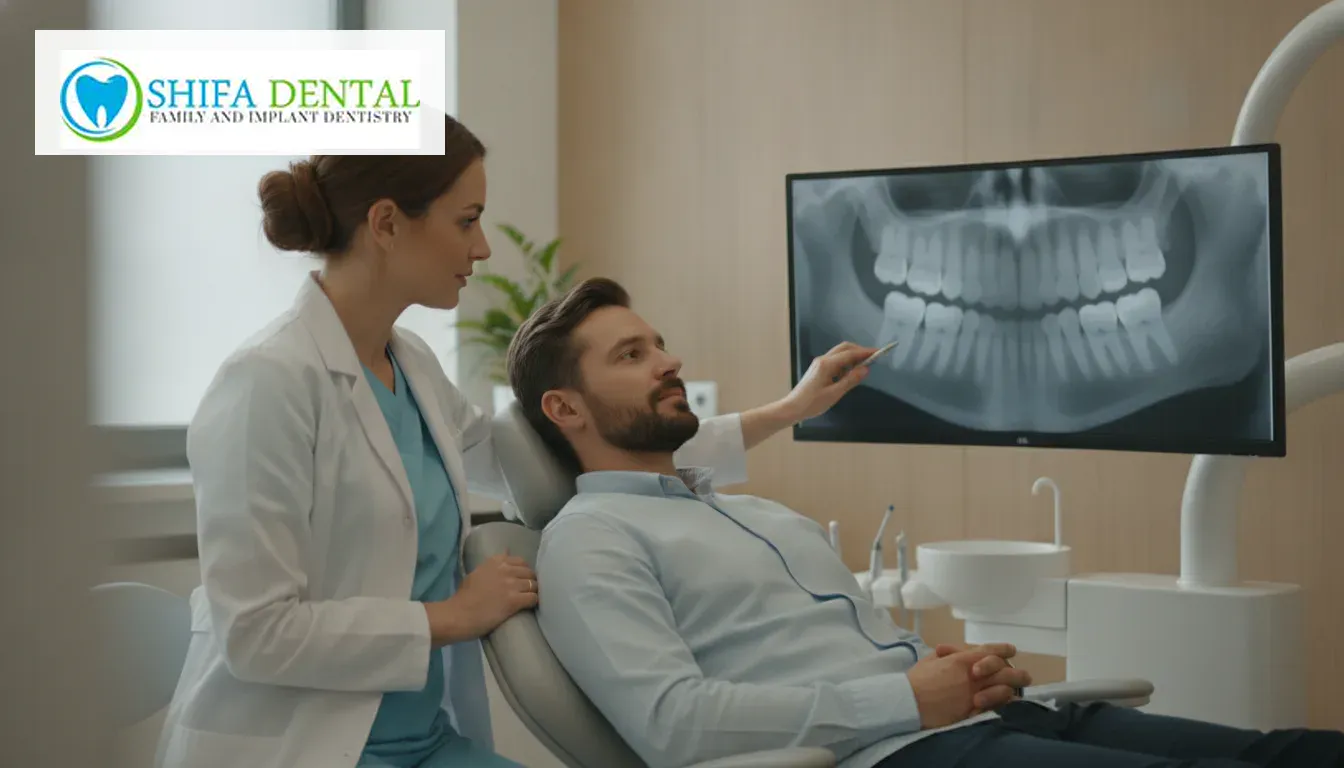
During the visit you can expect an oral exam and imaging chosen for your mouth. A panoramic or other dental X-ray can show whether the tooth is present and how it is angled. It can also show how close the tooth sits to the neighboring molar. The dentist may check the gum around a partly erupted tooth, the second molar, and the space available. The exam also looks for infection and for spots you cannot keep clean at home.
Shifa Dental’s wisdom tooth evaluation page describes imaging, treatment planning, and a discussion of sedation options as parts of the care pathway. Which images and which plan you need depend on the exam and the tooth’s position. If the case looks more complex, the dentist can explain whether a referral is appropriate. A service page is not a promise that a specific clinician, sedation option, or same-day procedure is available at a given office that day.
| What you notice | Why an evaluation may help | What the dentist may consider |
|---|---|---|
| Pain or pressure behind the last molar | The ache can come from eruption, inflammation, decay, or another tooth. | Tooth position, gum condition, decay, and the neighboring molar. |
| Swelling, drainage, a bad taste, or repeated irritation | These signs can point to inflammation or infection that needs timely attention. | Whether the area can be cleaned, whether infection is present, and which treatment is safest. |
| No symptoms, but an X-ray shows an impacted tooth | Some problems develop before you feel pain. | Available space, angle, nearby roots, bone, and whether monitoring is reasonable. |
| Trouble opening your mouth or chewing | Limited movement can occur with swelling near a back tooth. | How severe and how long the problem has been, and whether urgent care is needed. |
When to see a dentist about wisdom teeth
You do not have to wait for severe pain. A routine exam can find a wisdom tooth that is growing in a difficult spot. Contact a dentist when symptoms show up around the back molars, especially if they return after they seemed to settle.
- Pain, tenderness, or pressure behind the last molar.
- Red, swollen, bleeding, or sore gum tissue around a wisdom tooth.
- Food that keeps getting trapped in the same spot.
- Bad breath or a bad taste that seems to come from the back of the mouth.
- Jaw soreness, facial swelling, or trouble opening your mouth.
- A cavity, gum problem, or damage near the second molar.
- An X-ray that shows an impacted or partly erupted tooth.
- A recommendation to check wisdom teeth before braces or other dental treatment.
These signs do not prove that removal is necessary. They explain why an exam is useful. The American Dental Association’s wisdom teeth guidance says a dentist generally examines the mouth and takes an X-ray before discussing the next step. It also lists pain, infection, cysts, tumors, damage to neighboring teeth, gum disease, and tooth decay as reasons removal may be considered. Decay is a reason when restoring the tooth is not possible or not a good plan.
Ask for prompt dental advice if swelling or pain is getting worse. Do the same if you have a fever, drainage, or trouble opening your mouth as usual. If swelling affects breathing or swallowing, seek emergency medical care. A blog cannot judge how urgent one person’s symptoms are.
What happens during the evaluation
Knowing the sequence can make it easier to book. A wisdom tooth evaluation often follows these steps.
- Share your symptoms and history. Say when the problem started, whether it has happened before, and what makes it better or worse. Mention medicines, allergies, medical conditions, pregnancy, and any earlier dental advice.
- Have an oral exam. The dentist checks the gum, the tooth or the opening where it is coming in, and the nearby teeth. The exam also covers your bite, swelling, and spots that are hard to clean. It looks for another cause of the symptom.
- Review dental imaging. An X-ray can show the tooth’s angle, depth, roots, and relationship to the teeth beside it. If more imaging would help plan care, the dentist can explain why. Shifa Dental’s dental X-ray page describes imaging as a way to see structures that an exam alone cannot show. Imaging is selected for the case. It is not a promise that a particular scan is used for every patient.
- Talk through the options. Depending on the findings, the plan may be monitoring with regular checkups, better cleaning around the tooth, treatment of active disease, or extraction. Timing depends on symptoms, infection, tooth position, age, overall health, and the condition of nearby teeth.
- Plan the next step. If removal is recommended, ask whether a simple or surgical extraction is more likely. Also ask which anesthesia or sedation options may be considered after medical screening. Ask what recovery may involve and which warning signs should prompt a call.
Oral sedation and nitrous oxide are different. If oral sedation is considered, it needs medical screening, an escort home, and no driving or operating machinery for 24 hours. Do not assume a sedation option is available until the office confirms it for your visit and your health history.
Does an impacted wisdom tooth always need removal?
No. Impacted means the tooth is blocked from coming in fully or is growing in an unusual position. That word alone does not answer whether it should be removed. The dentist weighs the tooth’s condition, the tissue around it, and whether you can clean it. The dentist also weighs current symptoms or disease and the likely risk of leaving the tooth.
A tooth may be monitored when it is healthy, functional, painless, free of disease, and in a position that allows home care and professional cleaning. Monitoring is an active plan, not a decision to ignore the tooth. It can include periodic exams and X-rays so a change is caught. AAOMS also notes that a tooth which has not fully erupted is usually impacted because there is not enough room.
Removal may be discussed when a tooth is repeatedly infected, cannot be cleaned, or has decay that cannot be restored in a predictable way. It may also be considered when the tooth damages a neighbor or contributes to gum disease. A cyst, other pathology, pain, or swelling can also change the plan. Even then, the decision should come from your exam. It should not come from a general rule about age or how many wisdom teeth you have.
Ask the dentist to explain the reason in plain language. You can also ask what may happen if the tooth is watched, how often it should be checked, and which symptoms would change the plan. A second opinion is reasonable when the procedure looks complex or you want another explanation of the imaging.
How long recovery can take after removal
Recovery time is part of the evaluation, not a promise made before the exam. If removal is recommended, ask what the first few days may feel like and which warning signs should prompt a call. The American Association of Oral and Maxillofacial Surgeons says some discomfort is common for the first few days, while some people have little pain. Soft tissue can still be sensitive for several weeks. Jawbone and gum tissue take longer to heal fully, and one person’s pace is not the next person’s. Read the AAOMS healing overview.
AAOMS also separates the early days from later healing. Swelling, pain, and light bleeding can occur in the first few days and usually ease. An ice pack used on and off for the first 48 to 72 hours may help swelling. After that, moist heat may help a sore jaw if your clinician says it is appropriate. Soft foods and plenty of liquids are the usual early diet. Straws, smoking, hard foods, and vigorous rinsing can disturb the clot. After about a week, new tissue starts to close the site. From about two to four weeks, swelling and soreness should keep fading, though full healing continues after that. See the AAOMS after-extraction healing notes.
| Phase | What is common | What to ask your dentist |
|---|---|---|
| First few days | Soreness, swelling, and light bleeding can occur. Some people have little pain. | Which pain plan, diet, and warning signs apply to your case. |
| First 48 to 72 hours | Intermittent ice may help swelling. Avoid straws and vigorous rinsing. | How long to rest, and when moist heat is appropriate for a sore jaw. |
| About 1 to 2 weeks | New tissue starts to close the site. The clot still needs protection. | How to clean the area, and which signs suggest dry socket or infection. |
| About 2 to 4 weeks and after | Swelling and discomfort usually fade. Soft tissue can stay sensitive for several weeks. Bone and gum healing continue. | When you can return to normal chewing, work, and sports. |
Shifa Dental’s extraction page says most patients recover comfortably within a few days when they follow aftercare. Its page FAQ describes about 3 to 5 days for initial recovery, with full healing over a few weeks. Treat those lines as general practice language, not a guarantee for your mouth. A surgical extraction, infection, or a medical condition can change the pace. The office should give written instructions for your visit.
A dry socket is a post-extraction complication, not a normal part of healing. It can happen if the clot dissolves or is dislodged. Shifa Dental’s dry socket guide explains warning signs and when to call. Call the office you chose if pain gets worse after it had started to ease, if swelling spreads, or if you have a fever, drainage, or trouble opening your mouth. Use the phone number on that office page. Do not copy a number from another page or from this article.
Existing Shifa Dental articles already cover Plano removal timing, a general removal overview, pain after extraction, and cost. This guide stays on the evaluation decision and on what to ask about recovery before you book. It does not replace those pages or the written aftercare you receive after a procedure.
How to prepare for the appointment
Bring a list of medicines and supplements, known allergies, and relevant medical conditions. Bring any recent dental X-rays you already have. Write down your symptoms and questions before you arrive. If another dentist or orthodontist recommended removal, bring that note so the new evaluation can address the original concern.
Useful questions include:
- Which wisdom tooth is causing the concern, if any?
- Is the tooth fully erupted, partly erupted, or impacted?
- What does the imaging show about the neighboring teeth and surrounding structures?
- Is monitoring reasonable, and what would the follow-up schedule be?
- If removal is recommended, is a simple or surgical extraction more likely?
- Which anesthesia or sedation options may be appropriate after medical screening?
- What should I arrange for the day of treatment and the first part of recovery?
- Which symptoms after the visit or a procedure should prompt a prompt call?
If you are comparing ways to pay, review the practice’s financing information and ask the office about your own plan. Insurance benefits, deductibles, annual maximums, waiting periods, and exclusions vary. A benefits check is not a guarantee of coverage, and this article is not a personal fee. A printed special is not a quote unless the office confirms it is still offered for your treatment.
Choosing a remove wisdom teeth dentist in Plano or Garland
Shifa Dental is a family and cosmetic practice with two offices. Plano is at 5509 Pleasant Valley Dr #90A, Plano, TX 75023. Garland is at 1918 N Plano Rd, Garland, TX 75042. Both offices list wisdom tooth extraction among the services patients can ask about. You can review the Plano wisdom tooth extraction page or the Garland wisdom tooth extraction page before you book. Allen and Richardson are nearby communities, not additional offices.
When you request a visit, say whether you need a routine evaluation, have recurring symptoms, or were told about a finding on another X-ray. If symptoms feel urgent, say that clearly so the team can direct you to the right visit type. Hours differ by office and by page, so confirm that day’s hours on the office page you choose. Do not rely on a schedule copied from an article.
Phone numbers also disagree across the site. The header, the contact page, the office pages, and the scheduler do not all print the same desk number. This article does not pick one. Call the number listed on the Plano office page or the Garland office page for the office you want. If swelling, fever, or trouble opening your mouth is getting worse, ask that office for the soonest appropriate visit. Seek emergency medical care if breathing or swallowing is affected.
Same-day treatment is not guaranteed. It depends on the exam, the schedule, and whether your health history and the tooth’s position make treatment appropriate that day. If you want a second opinion before removal, say that when you book. The evaluation should explain the imaging and the reason for any recommendation.
Schedule a wisdom tooth evaluation and choose the Plano or Garland office in the scheduler. You can also review the wisdom tooth extraction page before you book.
Frequently asked questions
What does a dentist check before removing wisdom teeth?
The dentist checks your symptoms, gum tissue, tooth position, nearby teeth, available space, and imaging. The goal is to see whether the tooth is healthy and can be kept clean. The exam also asks whether it is causing disease or damage, or whether removal is the safer plan. Your medical history also matters when the discussion turns to anesthesia, sedation, medicines, and recovery.
How long does recovery take after wisdom teeth removal?
There is no single recovery date. AAOMS says some discomfort is common for the first few days, soft tissue can stay sensitive for several weeks, and bone and gum healing take longer. Shifa Dental’s extraction page describes about 3 to 5 days of initial recovery and full healing over a few weeks. Ask for a plan that matches your tooth and health history.
Which phone number should I use?
Use the number on the Plano or Garland office page for the office you want. Those pages, the site header, the contact page, and the scheduler do not all list the same number. This article does not print a phone number because picking one would be a guess.
Can wisdom teeth be removed if they do not hurt?
Sometimes, but not automatically. A painless tooth can still be hard to clean or can affect a nearby tooth. Some healthy wisdom teeth can be monitored. The decision should follow an exam and an imaging review, not pain alone.
Will an evaluation tell me whether I need surgery?
It can help the dentist estimate whether a simple or surgical extraction is more likely. The final plan depends on the tooth’s position, roots, surrounding bone and tissue, your medical history, and the clinician’s assessment. Ask which findings led to the recommendation, and what recovery may involve if removal is advised.
Plan Your Wisdom Tooth Evaluation in Plano or Garland
A wisdom tooth evaluation replaces guesswork with a plan. The next step may be monitoring, treatment, or removal. That choice should rest on an exam, the right imaging, your symptoms, and the teeth around the wisdom tooth. If removal is part of the plan, ask about the first few days, the weeks after, and which symptoms should prompt a call. If you are looking for a remove wisdom teeth dentist near Plano or Garland, request an evaluation and choose the office that fits the visit.
Schedule a wisdom tooth evaluation and choose the Plano or Garland office that fits your visit.