What is a dental extraction? It is the removal of a tooth from its socket in the jaw. The American Dental Association describes it as having a tooth taken out, usually because of disease, injury, or crowding. It is not a cleaning, a filling, or a root canal. Those treatments try to keep the tooth. An extraction takes the tooth out when keeping it is no longer the safer plan.
That definition does not tell you whether your tooth should come out. Decay, a crack, infection, or a wisdom tooth that never fully came in can all lead to the same conversation. The right next step still depends on an exam. At Shifa Dental, that exam happens at the Plano office on Pleasant Valley Drive or the Garland office on North Plano Road. The dentist looks at the tooth, reviews images, and talks through whether to restore it or remove it.
Schedule an appointment to review dental extraction care
What a Dental Extraction Actually Does
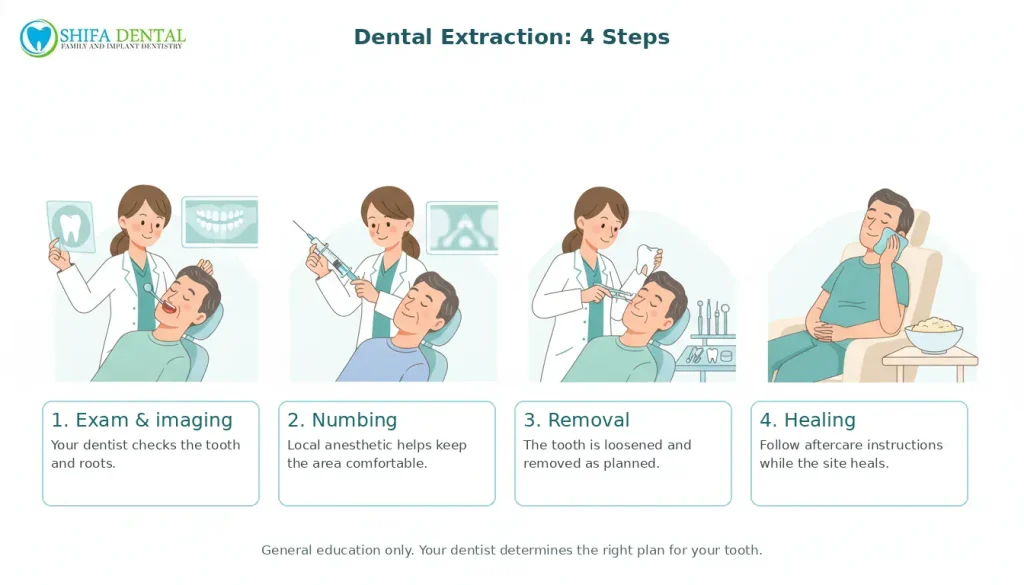
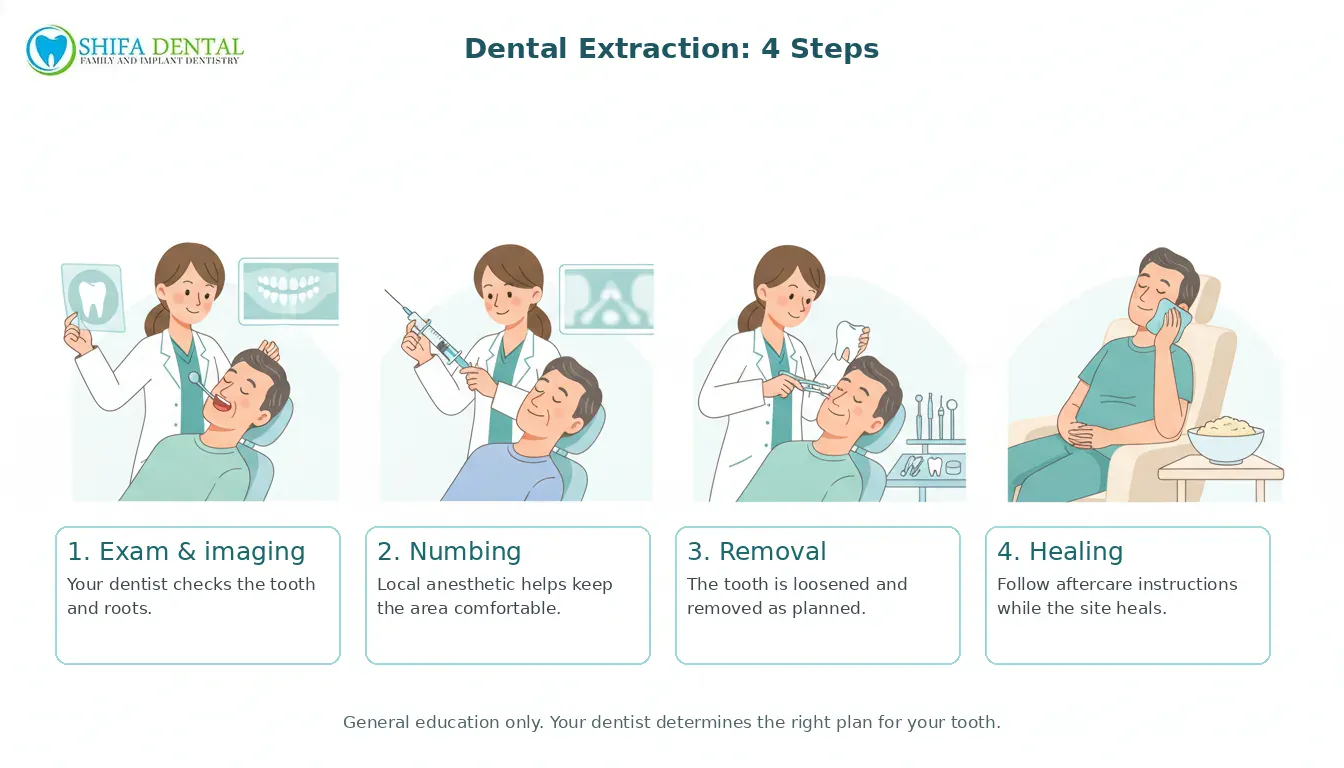
The tooth sits in a bony socket, held by the ligament and covered by gum. During an extraction, the dentist numbs the area, loosens that attachment, and lifts the tooth out. The ADA MouthHealthy page on extractions says a small amount of bleeding is normal afterward, and the socket fills in as a blood clot forms where the root was.
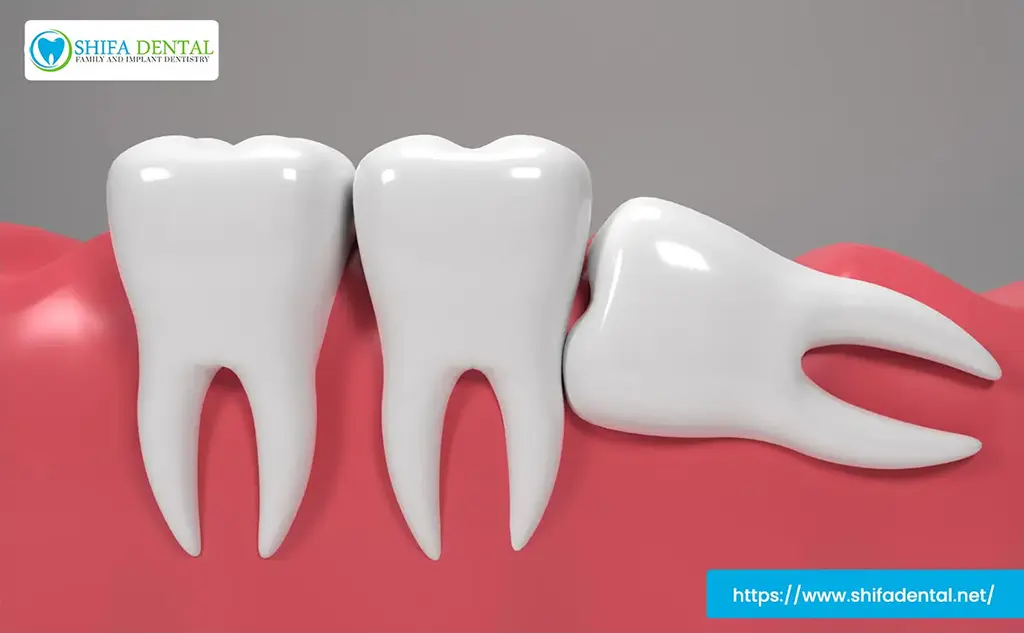
People use “dental extraction” and “tooth extraction” for the same procedure. Wisdom-tooth removal is one type of extraction, not a different category of care. A baby tooth can also be removed when it will not come out on its own or is blocking the adult tooth behind it. In every case, the goal is to take out the source of pain or infection, or to make room, not to rebuild the tooth.
Children may need an extraction for a different reason than an adult, such as a baby tooth that is stuck, badly damaged, or interfering with an adult tooth. The dentist first checks the child’s tooth, growth, and developing adult tooth before recommending removal; it is not routine for every loose or sore baby tooth. Families can learn more about children’s visits and services on Shifa Dental’s pediatric dentistry page.
Removal is not the first idea for every damaged tooth. A filling, a crown, or root canal therapy may still save a tooth that has enough healthy structure. Extraction becomes the conversation when the tooth is too broken to restore, or when infection will not settle with other care. It also comes up when the tooth is loose from advanced gum disease, or when it is in the way of other teeth. Your dentist makes that call after looking, not from a symptom list alone.
Why an Exam and Imaging Decide the Plan
You cannot tell from the chair whether a tooth is a simple lift or a more involved removal. A tooth that looks intact above the gum can still have a curved root, a crack under the bone, or an infection at the tip. That is why the visit starts with an exam and images, not with a promise about how the appointment will go.
Shifa Dental uses digital X-rays as part of that exam. When the dentist needs a closer look at root position, bone, or nearby nerves, the office can also use cone beam computed tomography, a 3D scan, when it is needed. A scan is not routine for every tooth. It is a tool for cases where a flat film does not show enough. Imaging does not by itself mean the tooth has to come out. It shows the dentist what is safe to try.
The same visit covers your health history. Tell the team about medicines, especially blood thinners, and about heart conditions, diabetes, pregnancy, or a history of jaw radiation. Those details can change the timing, the comfort plan, or whether another treatment should come first. They do not, by themselves, rule an extraction in or out.
| Question at the exam | What the dentist is checking | Why it changes the plan |
|---|---|---|
| Can this tooth be restored? | How much healthy tooth is left, and whether decay or a crack reaches the root. | A filling, crown, or root canal may still be possible. |
| Where are the roots? | Root shape, length, and how close they sit to bone, sinus, or nerve. | A curved or buried root may need a surgical approach. |
| Is there infection? | Swelling, pus, and bone changes on the image. | The dentist may treat infection before or along with removal. |
| What else is nearby? | Adjacent teeth, gum pockets, and whether the tooth is blocking alignment. | Crowding or a wisdom tooth changes timing and follow-up. |
Bring the tooth that hurts, any recent images from another office, and a list of your medicines. If you already had a root canal or a crown on that tooth, say so. Old treatment changes what the image means, and it saves a repeat of work you have already done.
Simple and Surgical Removal Are Not the Same Visit
Dentists sort extractions by how they reach the tooth, not by how nervous you feel. A simple extraction is for a tooth the dentist can see and grasp above the gum. After the area is numb, the tooth is loosened and lifted. Many visible teeth follow this path. It is still a surgical procedure in the everyday sense, and it still needs aftercare.
A surgical extraction is for a tooth that is broken at the gum, covered by tissue, or not fully erupted. The dentist may need to move a small amount of gum or bone to reach it, then close the site. Impacted wisdom teeth often fall here. So can a molar that snapped off and left the roots behind. Surgical does not mean you will be asleep. It means the path to the tooth is less direct.
Comfort is a separate decision from the type of removal. Local anesthetic numbs the tooth for either approach. Some patients also use nitrous oxide, which you breathe through a nose mask and which typically wears off quickly. Oral sedation is a prescribed medicine taken before the visit. It is not the same as nitrous oxide. It needs a health review, and the person who takes it needs a ride home and should not drive or use machinery for 24 hours. Whether either option is appropriate depends on your health and the plan for that day. A service listing is not a promise that a specific comfort option is available at a specific office on a specific date.
Same-day removal is also conditional. Shifa Dental can sometimes remove a painful or infected tooth in one visit after the exam shows it is safe to do so. That is not a guarantee for every caller, and it is not the same as finished healing. The clot still has to form, and the gum still has to close. If you are in severe pain, swelling, or trouble swallowing, call the office and ask to be seen promptly rather than waiting on a routine opening.
Dental Extraction Recovery Timeline
Recovery varies with the tooth, the type of extraction, your health, and the instructions your dentist gives you. This general timeline can help you know what questions to ask, but it does not replace your personalized aftercare plan.
| Time | What may happen | What to do |
|---|---|---|
| First day | A blood clot begins forming. Mild bleeding, soreness, and swelling can occur. | Bite on gauze as directed, choose soft foods, and avoid smoking, straws, and vigorous rinsing. |
| Days 2–3 | Soreness or swelling may still be noticeable, especially after a surgical extraction. | Follow the prescribed or recommended pain plan and contact the office if symptoms are severe or worsening. |
| Days 4–7 | Many people begin to feel more comfortable, although the socket is still healing. | Keep the area clean as instructed and return to normal activity only as your dentist advises. |
| After the first week | Soft-tissue healing continues. Deeper bone healing takes longer and varies by tooth and procedure. | Attend any follow-up and ask when replacement options or regular brushing around the site are appropriate. |
Call the dental office promptly for bleeding that does not slow with the instructions you were given, worsening pain after initial improvement, increasing swelling, fever, or trouble swallowing or breathing. A dry socket is a post-extraction healing complication that needs dental advice.
What You Can Ask Before You Agree
Once you know the definition, the useful next step is a short list of questions. You do not need a script. You need enough detail to understand why this tooth, why now, and what happens after.
- Why is removal the recommendation instead of a filling, a crown, or a root canal?
- Is this expected to be a simple extraction or a surgical one, and what did the images show?
- Will I need only local anesthetic, or are nitrous oxide or oral sedation being considered?
- What should I do about my medicines that day, especially anything that affects bleeding?
- How should I protect the clot, and when should I call if pain or swelling gets worse?
- Will this space need a replacement later, such as an implant, a bridge, or a partial denture?
Those questions belong in the visit, not in a search result. A longer checklist of visit questions lives on our page about what to ask before a tooth extraction. Day-by-day healing is a different topic. If you want that timeline, read how healing stages usually unfold, then confirm the instructions you were given, because your site can differ.
Cost is also a visit question, not a number this page can give you. The fee depends on which tooth, whether the removal is simple or surgical, and whether sedation or follow-up care is part of the plan. Shifa Dental accepts most dental insurance plans, and you still need to verify your own benefits, waiting periods, and annual maximum. Qualified patients can ask about CareCredit, Cherry, or in-house interest-free plans. The Shifa Smiles Plan is a discount membership, not insurance. It starts at $175 for the first member, plus a one-time nonrefundable $20 processing fee, and the discount on other procedures cannot be combined with insurance. None of those options is a quote for your extraction.
How Removal Fits the Rest of Your Mouth
Taking a tooth out solves the problem in that socket. It can create a new one next door if the space is left empty for a long time. Nearby teeth may drift, and the opposing tooth may grow into the gap. That is why the extraction visit often includes a short talk about what, if anything, should replace the tooth later.
Replacement is not automatic, and it is not the same day as removal for most people. A back tooth that has no partner to bite against may not need a replacement. A visible tooth, or one that holds the bite, often does. Options the dentist may discuss after healing include a dental implant, a bridge, or a partial denture. An implant is placed in the bone and typically needs about three to six months to integrate before a final crown. That timeline is typical, not a promise for every jaw.
Wisdom teeth are the common exception to the replacement talk. They usually are not replaced, because the mouth is not missing a tooth the bite depends on. They still need their own exam. A wisdom tooth that is erupted, easy to clean, and not hurting may be watched. One that is stuck, decayed, or crowding other teeth may be planned for removal. That decision belongs on the wisdom tooth extraction page and in the chair, not in a general definition.
Infection changes the order of care, not the definition. Pus, a bad taste, or swelling means the dentist has to decide whether the tooth can be saved or whether removal is the way to clear the source. That is a different article from this one. If that is your situation, say so when you book so the team can plan the exam around an urgent tooth rather than a routine question.
What to Carry to the Dental Extractions Visit
Use the definition as a filter. If you only needed to know what the word means, you have it: a dental extraction removes a tooth that the dentist has decided not to restore. If you are deciding about your own tooth, the next page is the service page, and the next step is an exam.
Before you go, write down the answers you already have and the ones you still need. Note which tooth hurts, how long it has hurt, and whether you have swelling, a bad taste, or pain when you bite. Bring a photo of any swelling if it comes and goes. Bring your insurance card if you have one, and a list of medicines. Ask which office is easier for you. Plano is at 5509 Pleasant Valley Dr #90A, Plano, TX 75023. Garland is at 1918 N Plano Rd, Garland, TX 75042. Hours can change, so confirm that day’s hours when you book.
On the service page, look for how the office describes simple and surgical removal, imaging, and follow-up. Then ask the six questions above in your own words. If healing later does not match what you were told, or if pain worsens after it had started to ease, call the office. A dry socket is a healing complication after removal, not part of the extraction itself, and it needs the dentist to look at the site.
Shifa Dental is a family and cosmetic practice. Extractions sit next to fillings, crowns, root canals, and implants, so the recommendation can include saving the tooth when that is still reasonable. The dentist who examines you makes that call. Content on this page is general information, not a diagnosis and not a fee.
Choose the Plano or Garland office and schedule an appointment for dental extraction care. If you want a second look before you agree to removal, ask for a second opinion at the same visit.
Frequently Asked Questions
What is a dental extraction in plain terms?
It is the removal of a tooth from the socket in the jaw. Dentists recommend it when disease, injury, infection, or crowding makes keeping the tooth the worse option. The exam, not the definition, decides whether that applies to you.
Is a dental extraction the same as a wisdom tooth removal?
Wisdom tooth removal is one kind of extraction. The same word also covers a decayed molar, a broken tooth, or a baby tooth that will not loosen. The steps differ based on where the tooth sits, which is why imaging matters.
Does an extraction always hurt?
The dentist numbs the area first so you should not feel sharp pain during the removal. Pressure is still common. Afterward, soreness is normal for a few days. Worsening pain, swelling, or bleeding that will not slow is a reason to call the office, not a reason to wait it out.
Can I eat normally after an extraction?
Not right away. The ADA advises against smoking, vigorous rinsing, and drinking through a straw for the first day, because those can disturb the clot. Follow the diet and rinse instructions your dentist gives you. Soft foods are typical at first, and the other teeth can still be brushed.
Will I need a new tooth after the extraction?
Sometimes. A wisdom tooth usually is not replaced. A tooth that shows when you smile, or that holds the bite, often is. Implants, bridges, and partial dentures are later conversations, after the dentist sees how the site is healing.